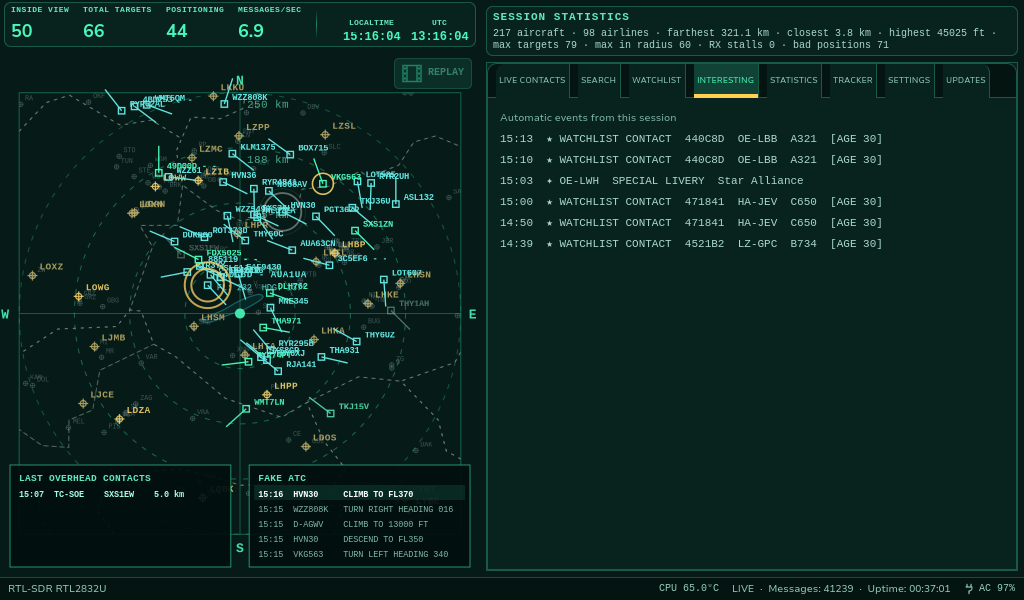
Live ADS-B contacts
Current targets, callsigns, altitude, speed, squawk and decoded aircraft information in one focused view.
RADAR SOFTWARE
ADS-B Radar brings locally received aircraft data into a dedicated, touch-friendly interface.
THE RADAR
From a compact Raspberry Pi installation to a Linux workstation, ADS-B Radar presents live Mode-S / ADS-B traffic as an operational radar rather than a browser tab.
Current targets, callsigns, altitude, speed, squawk and decoded aircraft information in one focused view.
Watch registrations or aircraft types and recognize interesting traffic when it returns.
Separate noteworthy traffic from routine contacts received directly at your location.
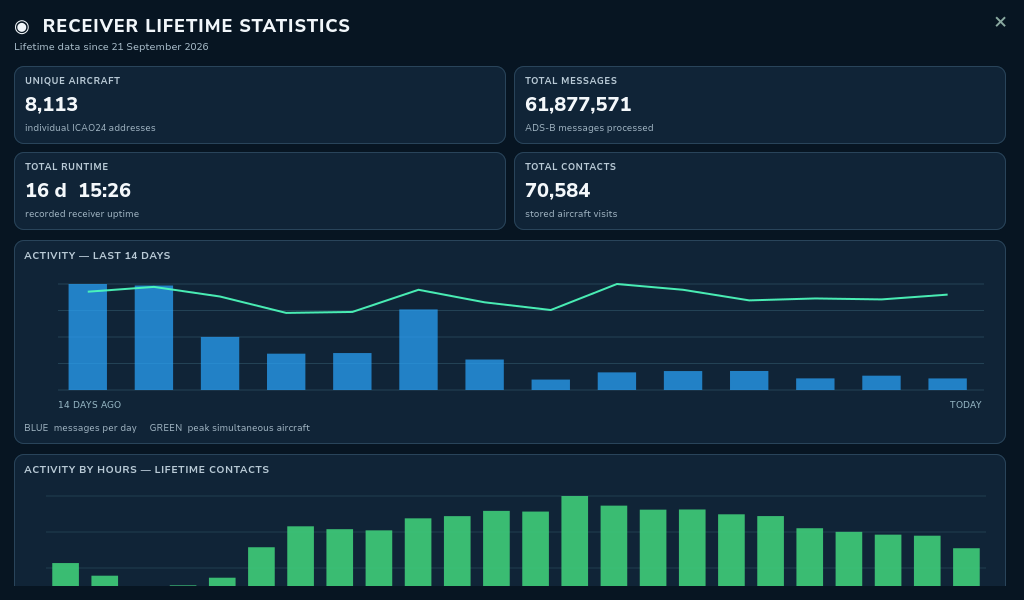
Build permanent visitor history and statistics from aircraft actually received at your station.
Optionally feed your locally received ADS-B data to supported aircraft tracking services. Your radar itself remains completely independent.
Open current METAR weather directly from the radar for major airports, including wind, temperature, pressure, visibility and the raw METAR report.
With a favorable site and antenna installation, aircraft can be received hundreds of kilometres away — up to roughly 400 km in good conditions.
Application updates and aircraft, airline, flight and ICAO reference-data updates are provided without a subscription or update fee.
Designed for a clean appliance-style installation with branded startup and a full-screen radar interface.
Turn a large screen into a live radar display with aircraft lists, selected-aircraft information and flight profiles.
View locally received aircraft on a geographical radar screen from a compatible browser on your local network.
Choose any airport worldwide. A receiver-distance warning explains when local reception is unlikely, without implying remote aircraft coverage.
A compatible receiver listens for 1090 MHz Mode S and ADS-B transmissions. The reader decodes incoming messages and the radar presents the resulting aircraft information locally. Reception depends on antenna placement, terrain, obstacles and aircraft altitude.
TV Radar and GEO Web Radar are additional ways to view aircraft actually received by the box. They do not require a separate ADS-B receiver or an online flight-tracking account. See both interfaces and screenshots →
Select any airport worldwide to focus the display. The radar checks how far that airport is from the receiver and warns if reception is unlikely. Changing the display center does not change antenna coverage. See the warning and example →
Aircraft Collections turn unusual and disappearing aircraft types into spotting goals. The radar can use local aircraft history to distinguish new encounters from repeat visits, making each receiving station’s collection unique.