Touchscreen
The full radar interface is designed for direct touch operation on the device.
FROM ANTENNA TO SCREEN
Our hardware prototype combines reception, decoding and display in one compact device.
FUTURE PLAN · PROTOTYPE
The next step is a self-contained ADS-B Radar built around a Raspberry Pi and a 10-inch touchscreen in a custom enclosure. Power it up and operate the radar directly by touch — no phone, tablet or companion app required.
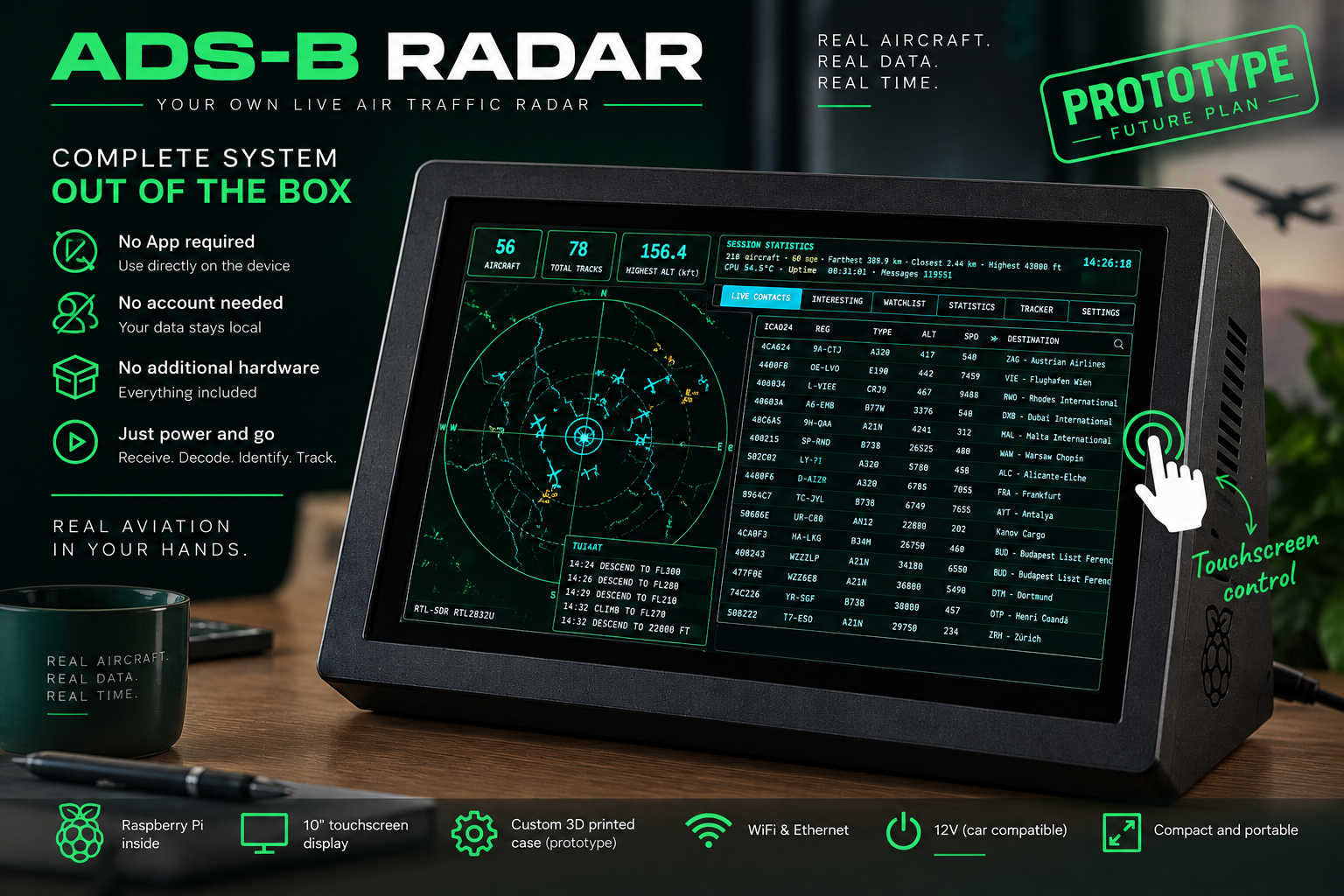
The full radar interface is designed for direct touch operation on the device.
A compact Linux platform capable of receiving, decoding and displaying busy local ADS-B traffic.
A purpose-built case turns the display and computer into one portable unit.
Planned 12-volt operation makes the concept suitable for mobile use, including aircraft spotting from a car.
FROM ANTENNA TO SCREEN
The planned ADS-B Radar appliance combines the supported receiver hardware, Raspberry Pi computer, display and decoding software in one system. Connect the antenna and power, configure networking where required, and the radar handles the normal operating workflow locally. The goal is a box you can place at home, at a spotting location or beside an airport and simply use — with no recurring radar service to pay for.
The prototype uses a Raspberry Pi 5 and an RTL-SDR Blog V4 receiver. The receiver supplies the radio samples; the reader processes ADS-B and Mode S messages; the application renders the radar and contact details on a local display.
A 10.1-inch touchscreen makes the interface usable without a separate phone or computer. The enclosure design provides for a 12 V power connection, antenna connector and power button at the rear. An X1202 battery board is part of the hardware testing. The enclosure and hardware arrangement are still being refined.
A clear view of the sky, antenna quality, cable losses and nearby interference all affect reception. Hundreds of kilometres are possible in favourable conditions, but results vary considerably between installations.